Blog


    How to Make Your Website Agent-Ready for AI Search in 2026


    AI Search agent readiness technical SEO GEO OAI-SearchBot structured data
    If your site is still optimized only for blue-link SEO, you are leaving visibility on the table. In 2026, a large chunk of discovery starts in AI interfaces such as ChatGPT Search and Google AI features, where users often get an answer with citations before they ever open a search results page. The good news is that “agent-ready” is not a mysterious new stack. It is mostly solid technical SEO plus better content structure, explicit crawler policy, and faster update signals.

    10 Best AI Social Media Automation Tools in 2026


    AI social media automation social media AI tools AI outreach tools LinkedIn lead generation AI posting tools social media lead automation MagicPost AuthoredUp PerfectPost
    Social media automation has moved beyond scheduling calendars. In 2026, the most useful tools behave more like narrow AI agents: they generate drafts, adapt content by channel, spot lead signals, trigger follow-ups, and help teams close the loop from post to pipeline. If you are evaluating this space, a practical way to compare tools is to split your workflow into two lanes: publishing automation and outreach/lead automation. Some products are stronger at multi-channel content operations, while others are built for intent detection and outbound on LinkedIn.

    Best AI Search Analytics Monitoring Tools in 2026


    best AI search analytics monitoring tools AI search monitoring AI visibility tracking AEO GEO brand mention monitoring citation tracking AI SEO tools
    AI search visibility is now a separate analytics problem from classic SEO. A page can rank on Google and still be absent from ChatGPT, Gemini, Perplexity, or AI Overviews. That is why teams now track two layers at once: search rankings and AI answer visibility. If you are evaluating tools in this category, the most important shift is to focus less on vanity dashboards and more on repeatable monitoring loops: prompt coverage, mention rate, citation quality, sentiment, and competitor share of voice over time.

    AI Harness Engineering: The Layer That Makes Your LLM Applications Actually Work


    AI harness harness engineering LLM applications agent systems LLMOps LangChain evaluation
    The difference between a flashy demo and a reliable product is usually not the model. It is the harness and infrastructure around it. A 2026 estimate says about 88% of AI agent projects never make it to production, mostly because the harness is too fragile. An AI harness is the operating layer around a language model. It determines how context is assembled, which tools are available, how memory persists across turns, how the control loop runs, and which quality gates output must pass before reaching a user.

    Expose Local MCP Servers Securely with Pinggy


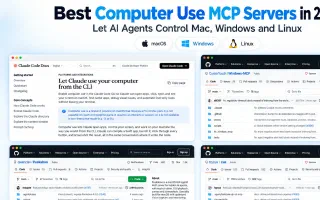
    MCP Model Context Protocol Pinggy localhost AI agents Tunneling Remote Access
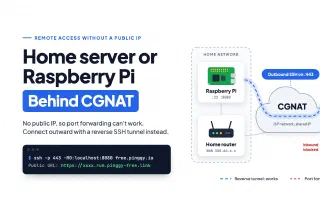
    Model Context Protocol (MCP) has become a practical way to connect AI assistants and agents to external tools, databases, documents, and workflows. During development, many MCP servers start on your own machine, which is convenient for testing but limiting when you want to connect from a hosted AI client, share a prototype with a teammate, or test the server from another device. Pinggy solves that localhost access problem by creating a public HTTPS tunnel to your local MCP server.

    Fast AI Inference Hardware in 2026: GPUs, TPUs, and Inference Chips


    AI inference GPU inference TPU inference NVIDIA H200 DGX B200 AMD MI300X AWS Inferentia2 Intel Gaudi 3
    When people ask for the “fastest” AI inference hardware, they usually mean one of two things: the lowest latency for interactive chat, or the highest throughput for serving at scale. Those are not the same target. A chip that wins on tokens/sec can still feel slow in a product if time-to-first-token (TTFT) is high or tail latency is unstable under load. This guide covers the main inference hardware families you will actually encounter in production in 2026: NVIDIA and AMD GPUs, Google Cloud TPUs, AWS inference chips, and Intel Gaudi accelerators.

    Which AI Design Tool Should You Pick in 2026?


    AI design tools Claude Design Google Stitch Figma Make Sketch MCP
    Most people comparing AI design tools are actually comparing two different categories at once. Some tools are best for visual exploration. Others are best when your team already has a design system and a mature review workflow. That is why “Claude Design vs Google Sketch vs others” is harder than it looks. In this article, I am treating “Google Sketch” as Google’s current AI design product, Stitch. If your real goal is faster ideation, Claude Design and Stitch are both worth attention.

    Why LLM Benchmarks Need a Reset


    LLM benchmarks AI evaluation LLM evaluation benchmarking generative AI AI safety
    Leaderboard culture makes LLM comparison look cleaner than it really is. A model gets a number, a ranking, and a reputation, and teams start treating that score as a shortcut for real capability. The problem is that large language models are not static software components. They are prompt-sensitive, update frequently, behave differently across languages and contexts, and can look impressive on narrow tests without being equally reliable in real workflows.

    Best AI LLM Routers and OpenRouter Alternatives in 2026


    LLM router AI gateway OpenRouter alternatives OpenRouter ngrok AI Gateway TrueFoundry Portkey LiteLLM
    Calling OpenAI, Anthropic, or Google directly is fine when you have one app, one model, and no real platform concerns. The moment you want fallback behavior, provider switching, budget controls, observability, or a clean way to mix hosted and self-hosted models, direct integrations start to feel brittle. That is where AI LLM routers come in. In practice, teams use the terms LLM router, AI gateway, and model gateway almost interchangeably.

    Is Claude Mythos Dangerous? - AI and Software Security


    Claude Mythos AI security software security Anthropic secure coding cybersecurity
    On April 7, 2026, Anthropic introduced Claude Mythos Preview alongside Project Glasswing, a coordinated security initiative with partners including AWS, Apple, Cisco, CrowdStrike, Google, JPMorganChase, Microsoft, NVIDIA, Palo Alto Networks, and the Linux Foundation. The announcement matters because Anthropic is not pitching Mythos as a slightly better chatbot. It is describing a frontier model that can materially change how vulnerabilities are found, validated, and in some cases exploited. That naturally leads to a harder question: is Claude Mythos dangerous?