T-Mobile Port Forwarding
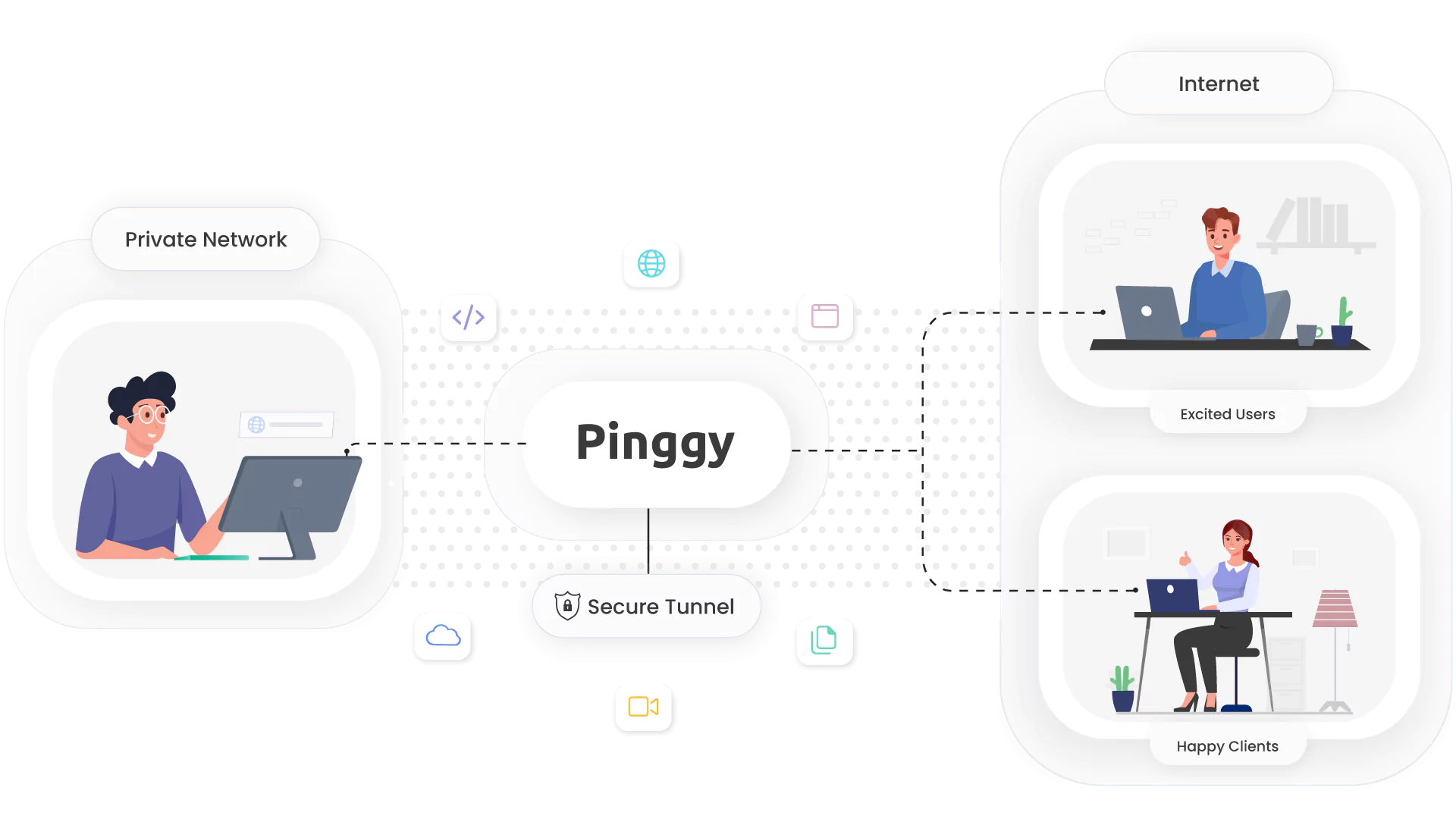
T-Mobile home internet uses CG-NAT, making port forwarding difficult. Learn how to create a Pinggy TCP tunnel to forward any port through T-Mobile's CG-NAT.
The latest revisions across our writing on tunnels, networking, self-hosting, self-hosted LLMs, and AI - freshest updates first.
T-Mobile home internet uses CG-NAT, making port forwarding difficult. Learn how to create a Pinggy TCP tunnel to forward any port through T-Mobile's CG-NAT.
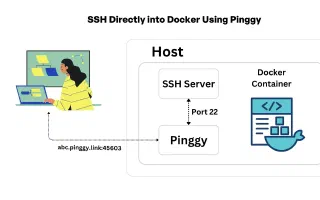
Learn how to securely SSH into Docker containers with practical examples and step-by-step instructions. Master container management and troubleshooting.
Networking basics for student developers: how IP addresses and ports work, what DNS actually does, TCP vs UDP, HTTP status codes and HTTPS, the client-server model, latency vs bandwidth, and the tools to reach for when a request fails.
A guide to the most capable open-weights AI image generation models and tools available for self-hosting in 2026, including the Artificial Analysis Arena leader Cosmos3-Super-Text2Image, plus FLUX.2, HunyuanImage 3.0, Qwen Image Max, Krea 2, Ideogram 4.0, and NVIDIA Sana.
Discover the top Playit.gg alternatives in 2026, including game server hosting, VPN solutions, and port-forwarding services to reduce latency for gaming.
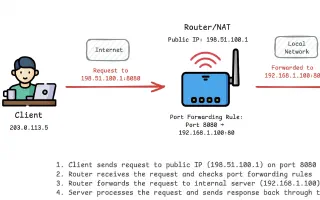
Learn when you need port forwarding, how to set it up on your router, and how to bypass CGNAT limitations using Pinggy tunnels for hosting servers and remote access.

Discover how AI agents leverage Model Context Protocol (MCP) servers to automate complex workflows, integrate with enterprise systems, and transform traditional job roles across industries.
oMLX turns a Mac into an OpenAI-compatible inference server with continuous batching and SSD-backed KV caching. Here's how it works, its new multi-Mac clustering, and how to reach it from your phone or a coding agent with Pinggy.
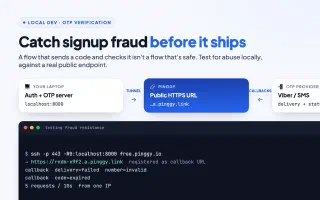
A working OTP flow proves your app sends and checks a code. It doesn't prove your signup holds up against bots. Here's how to test auth for fraud resistance locally with a Pinggy tunnel.
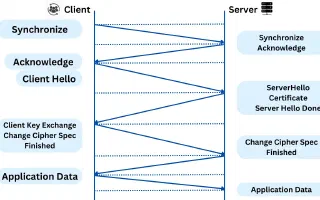
Transport Layer Security ensures secure communication by encrypting data and verifying the server’s identity through its certificate, while the client remains unauthenticated. Mutual TLS adds an extra layer of security by enabling two-way authentication, where both the client and server verify each other’s certificates. This makes mTLS ideal for high-trust use cases like secure APIs and microservices, whereas TLS is sufficient for general web applications.