Pinggy Blog

Recently updated posts

The latest revisions across our writing on tunnels, networking, self-hosting, self-hosted LLMs, and AI - freshest updates first.


The Evolution of AI Avatar Generators: From 2D Warping to Latent Diffusion

AI Avatars AI Video Generation Generative AI

How AI avatar generation moved from 2D mouth warping like Wav2Lip, through 3D morphable models and neural rendering, to audio-conditioned latent diffusion - with the trade-offs, the bottlenecks, and what to stress test before picking an engine.

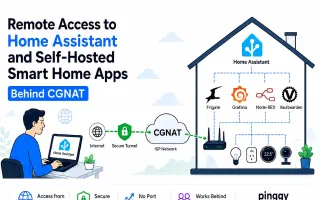
Remote Access to Home Assistant and Self-Hosted Smart Home Apps Behind CGNAT

Smart Home CGNAT Networking

Your ISP put you behind Carrier-Grade NAT, so port forwarding is dead. Here is how to reach Home Assistant, Frigate, Zigbee2MQTT, ESPHome and Node-RED from outside the house using an outbound tunnel, including the trusted_proxies settings that Home Assistant needs before it will answer.

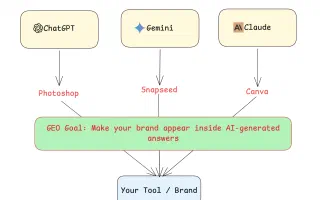
What is Generative Engine Optimization and How Can You Excel at GEO?

GEO SEO AI Search

Generative Engine Optimization (GEO) is the practice of structuring content to maximize visibility in AI-generated search responses. Learn what GEO is, how it differs from SEO, and actionable strategies to get your content cited by ChatGPT, Perplexity, Google AI Overviews, and more.

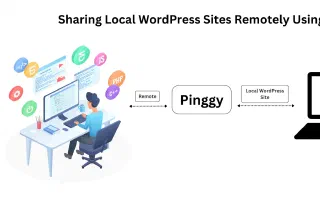
Sharing LocalWP WordPress sites

WordPress Pinggy Guide

Easily share your Local WordPress sites online with Pinggy. Guide covers steps to securely share LocalWP setups for collaboration and remote access.

Long Horizon Tasks with AI Agents: From Research to Working Prototypes

AI Agents AI Tools Automation

Long-horizon agent runs fail for structural reasons, not intelligence reasons. Here is what actually holds a multi-hour agent workflow together: a written success contract, separated discovery and delivery phases, persistent state outside the context window, external test oracles, checkpoints, and hard limits on autonomy.

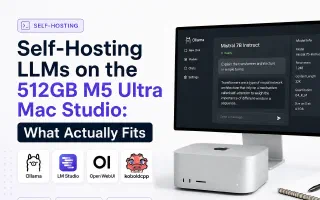
Self-Hosting LLMs on the 512GB M5 Ultra Mac Studio: What Actually Fits

Apple Silicon Local LLM Self-Hosted AI

Apple's M5 Ultra Mac Studio tops out at 512GB of unified memory at 1.2TB/s. Here is the memory math, which large open-weight LLMs actually fit, measured tokens per second, and three ways to run a model bigger than 4-bit allows: Unsloth GGUF quants, streaming weights off SSD, or a Thunderbolt 5 cluster.

AI Crawlers Now Cost More CPU Than All Your Real Traffic Combined

AI Crawlers Self-Hosted Open Source

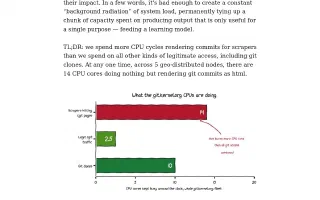
git.kernel.org now spends more CPU rendering pages for AI training scrapers than on every git clone and legitimate visit combined. Here's what the numbers say, why proof-of-work challenges like Anubis are winning and losing at the same time, and what it means for anyone running their own infrastructure.

How to Diagnose Email Deliverability Issues Using DNS Records

DNS Email Deliverability Networking

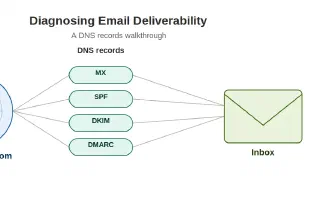
A practical technical guide to diagnosing email deliverability issues with DNS. Learn how to verify MX, SPF, DKIM, and DMARC records using terminal commands, fix duplicate SPF records, and ensure your emails reach the inbox.

Best Open Source Self-Hosted LLMs for Coding in 2026

Open Source LLM Self-Hosted AI Local LLM

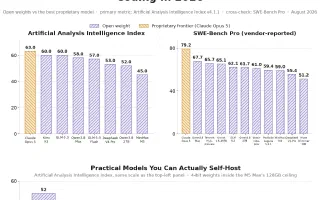
Discover the best open source LLMs for coding and development that you can self-host. Compare Kimi K3, Qwen3.8-Max, GLM-5.3, GLM-5.3-Flash, DeepSeek-V4-Pro, MiniMax M3, Qwen3.8-27B, Muse Glimmer 30B, Nemotron 3.5 Lightning and more with benchmarks, hardware requirements, and deployment guides.